Return home
Research
2026 Beauty Marketing Study
How generational differences, rising prices, and new technology are transforming the beauty shopping experience
 Return home
How generational differences, rising prices, and new technology are transforming the beauty shopping experience
Fully understanding beauty shoppers continues to become more complicated over time, as new technologies and platforms create many iterations of the customer journey. The role of online and in-store, the proliferation of AI uses for product discovery and research, and the extent to which specific product attributes influence purchase decisions all vary significantly for different generations and product categories. Add to that complexity the impact of recent US tariffs and years of inflation, and brands are navigating a challenging and competitive landscape.
To help marketers better understand the current state of beauty shopping, Tinuiti surveyed 1,050 US beauty shoppers in March 2026 to take the pulse of the impact of everything from inflation to influencers.
believe tariffs are raising beauty prices
are purchasing beauty products through TikTok Shop
have used AI for beauty research/purchases
Brick-and-mortar stores still dominate beauty product purchases, with at least 50% of shoppers typically purchasing skin care, makeup, fragrance, hair care, and nail care products mostly in-store. Skin care saw the highest share of shoppers purchase mostly in-store (61%), while makeup accounted for the highest share of shoppers purchasing mostly online (22%).
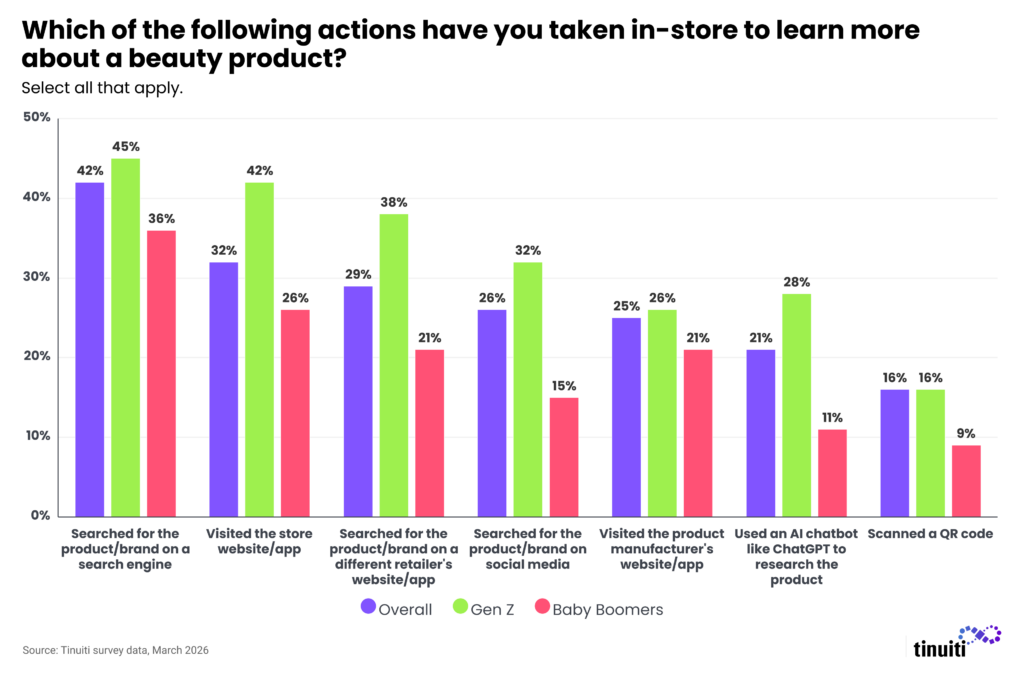
While physical stores are still the most common destination for beauty purchases, many in-store visits are accompanied by online interactions. Fully 42% of all beauty shoppers search for the products/brand on a search engine like Google when evaluating a beauty product in-store, and 32% visited the store’s website/app. As such, it’s critical for beauty brands to remain visible across digital channels and platforms.
Download the report to dive into all of the trends we uncovered, including: