RTB Marketing: 6 Experts Weigh In


“Real time bidding” (RTB) has been a resoundingly popular buzzword in the digital space in 2013. It’s a fairly technical subject, and if you dont know what I’m talking about, it’s best to go over a brief overview of RTB marketing here.
Real time bidding advertising will be a force in programmatic marketing over the next couple of years, but how will it get there? What will RTB marketing look like when it actually does reach its peak popularity?
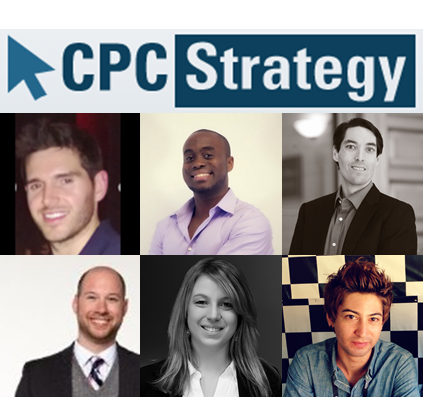
We were lucky enough to catch up with 6 real time bidding experts to discuss who can benefit the most from RTB technology and where the ad tech is headed.

Dustin is a business development lead for AdTheorent with a background in consumer data and programmatic buying.
O’Dell is currently based in NYC, working with top agencies and brands applying innovative thought at the intersection of mobile technology, data, and marketing to change how brands engage consumers.

Nathan leads the RTB team at Centro. He has 10 years of experience in planning and buying across the RTB space. His experience started with Paid Search/SEO and also includes Paid Social and Paid Video.
He is currently focused on Programmatic Buying efforts in display, mobile, and video for Centro’s clients.
 Craig is Chief Strategy Officer at Fiksu. Craig is a seasoned inventor and entrepreneur with a particular knack for creating client focused marketing and business development strategies for technology companies of all sizes, in all stages of growth – from inception to IPO or acquisition.
Craig leads Fiksu’s worldwide Marketing, Business Development, and Client Services efforts, spanning the Client Development and Client Performance teams who ensure client success.
 Jennifer is Head of Product Development at Mediative. After spending a few years at Accenture and at Aeroplan, Jennifer joined Mediative in 2010 as Manager of Strategic Development. In 2012, she was appointed Senior Product Manager, Display Advertising.
The same year, Marketing Magazine ranked her in their 30 Under 30 list of rising stars in the industry, and in June 2013, she was offered the helm of Product Management.
 Casey is Co-Founder at PocketMath. A ‘serial’ entrepreneur, Casey worked in finance for 4 years.
He got bored and started several unsuccessful companies, and his luck finally started to change on the fourth.
 Nii is our Chief Operating Officer here at CPC Strategy and is responsible for day-to-day financial and business operations of the company.
Prior to starting CPC Strategy, Nii was a product manager at eBay working on algorithmic merchandising, reviews and guides where he has a patent pending for improving the way eBay merchandises products to their visitors.
Jump to:
Dustin (AdTheorent):
RTB/programmatic buying is and can be effective across all mediums. The ability to analyze each impression one by one and determine the value for a particular advertiser or campaign is so effective and efficient that it’s only a matter a time before all applicable types of advertising will be programmatic and all advertisers/publishers will want to benefit. The automation of buying and selling digital ad space also allows humans to focus more on creativity and strategy, which will lead to more effective and engaging advertising across the board.
There may be a bit of a struggle as publishers may be hesitant to unlock certain portions of premium inventory or worry about controlling pricing and ironically, certain advertisers will be concerned with RTB marketing due to the fact that there’s not enough premium inventory. However, in mobile it’s much less of an issue since there’s a less definitive line dividing premium and remnant inventory, which should make the transition easier. Not to mention, publishers like Gawker are changing course on their opinions of RTB marketing, and they just announced a “private marketplace” as part of a strategy shift.
Nathan (Centro):
The effectiveness of RTB marketing campaigns will always vary depending on different factors. However, we’ve seen that RTB is most successful for programs that have enough volume and time to optimize and have a primary goal (KPI) to reach. There must be enough traffic to analyze and enough time to optimize, learn, optimize, learn, etc. The industry standard for minimum spend is typically $10K/month for 2 – 3 months. This obviously can change with rates and reach.
However, it is a good benchmark. Since there are thousands of inventory suppliers in this space, it is important to have access to as many of them as possible as they could all perform differently by advertiser, by objective, by day.
Craig (Fiksu):
One of the most exciting aspects of programmatic real-time bidding is that with automated optimization, you don’t have to know which sites or audiences will perform best: if you start spending on RTB, a well-tuned platform will quickly find and start honing in on those segments that do perform well. As demand side platforms (DSPs) learn what’s most effective for you, your bids get more and more accurate and your user acquisition gets more and more efficient.
To date, many of the best performers using our DSP have been games, thanks to the combination of an engaged audience that’s eager to try new games and lots of in-game inventory that provides many chances to reach those users.
RTB right now is really good at getting inventory that’s not available elsewhere, by aggregating more sources than you’d be able to handle individually. In a way, it’s giving you access to the long tail and systematically maximizing your performance across it.
Jennifer (Mediative):
Great question! RTB marketing is truly still within its infancy whereby a plethora of platforms, tools, and techniques still emerge each day. I recommend for all within the industry to get their hands dirty and start testing various techniques and tools. At Mediative, we are doing so each day to ensure that we’re coming up with the right mix of bidding strategies, data management, and private exchanges to ensure that our campaigns generate not only clicks – but moreover – conversions. I wouldn’t even bet on whether “brand safe” vs. “brand unsafe” sites are better for a campaign’s effectiveness. If a consumer is going to a “brand unsafe site” and the ad still engages the consumer, hasn’t it been effective?
That said, I think that we should be looking to tools and techniques that allow us to optimize the relevancy of the message for the end user. A healthy mix of data, above-the-fold bidding strategies and dynamic-creative optimization techniques are sure to win.
Casey (PocketMath):
We’ve seen the success of RTB adveretising in the desktop space for years and are now just starting to see it in mobile. And with that, mobile ads came into scale around the same time as RTB did (for desktop). So it was a natural fit for mobile apps and publishers to hop onto an RTB-enabled exchange or SSP (Supply-Side Platform) for monetizing their inventory. At first, it was a hard sell to convince premium desktop sites to monetize via RTB, but for apps, it was one of the only choices (and a sexy new one at that).
Buying in-app inventory via RTB is particularly effective if the bid request passes you a couple (great) parameters such as a Device ID (IFA, Android ID.) and Latitude/Longitude. So, in my perspective, it’s not so much which publisher you’re able to buy on (ex. Angry Birds, Flashlight App, or a Zynga Game) but about what type of data you’re able to utilize for targeting.
Nii (CPC Strategy):
 Everywhere and nowhere :). No, in all seriousness the effectiveness of placements sourced via RTB varies on what is being advertised, where it’s being advertised, and how it’s showcased. The key to profitability and effectiveness, as always, is testing.
Like search advertising, there are no silver bullets or catch-alls. With RTB there are going to be some segments and placements that are unprofitable and some that drive real traffic and sales. As long as a framework is in place to test placements, copy, and audiences by running campaigns to statistical significance, all advertisers can eventually get to a place where their RTB campaigns are hitting the metrics needed by their businesses.
Dustin (AdTheorent):
Certainly the tech savvy will have a head start but it won’t be long before all of these buying/selling processes are automated and most if not all major advertisers/publishers will fall in line. RTB, in conjunction with the appropriate data, creates the best opportunity to provide very personalized advertising and I think that’s where the value lies.
Targeting in the RTB space allows ads to be shown based on user-focused criteria and data by using things like prior search or browser activity or even more nuanced method such as predictive targeting, which analyzes data in real-time to predict user behavior and serve them the most appropriate ad. This is directly juxtaposed with traditional buying and selling, which is focused on the content/segment of a given property and an advertiser can only hope that they are on the right site to reach their audience. Clearly one can see why RTB is advantageous and as the technology and adoption increase, RTB will continue it’s rapid growth.
Nathan (Centro):
Businesses that can apply a value to an online activity will be the fastest to reap the benefits of RTB. For example, if I am a consumer researching turkey cooking tips, would a grocer or a CPG company be able to serve me an ad with a coupon for something I can use with my cooking? While I think most businesses will be able to benefit from RTB, the ones that will benefit the most will be those that have the insight and capacity to discover actionable insights — those with some level of digital insight/savvy.
Retail and education advertisers are typically digitally savvy. Insurance, finance, and other lead-gen businesses should also be in this space. Internet pureplays are also a great place to start. Pretty much any size advertiser can do it as long as they know how to use the tools in the space.
Craig (Fiksu):
In addition to games, another group seeing great results are big brands – RTB makes inventory available that they’d otherwise have trouble reaching. It’s easy for them to do direct deals, but not so easy to do lots and lots of small deals. Instead of doing one or two big media buys with the largest publishers, RTB lets us access hundreds or even thousands of small publishers that in aggregate have more volume at better pricing than large deals. And since big brands have corresponding big budgets, we get a lot of data quickly to optimize the results.
It’s also very good for those without established target markets – if you don’t know who to target, RTB is a great way to start bringing in users. Then you can examine those users to learn more about their characteristics to refine your next campaign.
It doesn’t work any better for tech-savvy companies: you don’t need to build any dedicated technology yourself, and there are plenty of qualified DSPs out there to handle your side of the equation.
Jennifer (Mediative):
I believe that with a minimum budget and knowledge of the RTB ecosystem, any business or advertiser could succeed in the RTB space. However, it is critical that the ads pushed by these businesses via ad exchanges are relevant to the consumers’ needs and wants at that given moment of the day. If not, the ad will simply be another piece of noise that our industry has been blamed for generating. As such, I don’t believe that it requires tech-savvy people behind a RTB campaign but marketing/consumer-savvy strategists.
I think that retailers have the most opportunity to win with relevancy in the RTB space. They can tailor their promotions and messages to the consumer information that data management platforms are able to capture via RTB. Imagine the power of sending an email to a consumer promoting 40% off everything in store on a Wednesday. The consumer may click through and browse the e-retail site but decide not to buy just then. At that point, the marketer could cookie the user as having interest in the goods that were viewed and then retarget them with ads for these specific goods over the next 2-3 days.
We all know that repetition causes action, so seeing the advertised sweater over the next days will likely generate a want within the consumer to finally buy the product. By the time the credit card is brought out, the retailer could have likely completed their one-day sale and now sold that good at full price.
Casey (PocketMath):
Good question. My initial thought is, well.. everyone. But why? It’s a low-cost, zero-waste solution for buying inventory, from small businesses geo-fencing specific storefronts or app developers driving more downloads and larger brands/agencies buying in bulk on premium apps for cheap.
However, you can argue that these larger brands/agencies have known this ‘secret’ for a few years so it’s hard for them to see that same economic benefit as would a small-to-mid-sized advertiser would get. Therefore my argument would there be that these small-to-mid-sized advertisers, brands, apps, and marketing companies will be the most to benefit from RTB since they can get started immediately once they find their DSP of choice.
And each advertiser is different. Some look to do mobile retargeting, hyper-local targeting or to branded buys where it’s more of an open buy order with little targeting on a country. Retail and eCommerce can really benefit as they start to retarget their own (app) users with special deals offered through mobile ads. So any retailer with an app can now reach their own specific customer segments targeted with a ad tailored for those users.
Nii (CPC Strategy):
In 2013 we saw publishers introduce more and more native looking ad units, especially on mobile. Given the immediacy of mobile and the ability to geo-target on handsets, traditional large retailers have the largest untapped opportunity to leverage RTB to drive traffic and sales into their online physical stores.
That said, seeing returns from RTB isn’t limited to just retailers, any business that has a strong sense of the analytical markers of their ideal/target audience has a strong case to take advantage of RTB.
Dustin (AdTheorent):
RTB will continue to see exponential growth and continue to expand beyond just desktop or mobile advertising and begin to be a major player in television, out-of-home, and even into the newest of technologies like wearable devices.
Imagine a day when you search for a pair of shoes at Macys.com on your phone while you were at home. Then you go out to dinner with friends and as you look at the Macy’s storefront when passing by, you see an overlay on your wearable device for a ‘25% off’ coupon for the shoes you were just searching.
That may seem far-fetched but the technology to pull that off exists today and as consumer education progresses and backend technology becomes more fluid, this type of personalized advertising will become commonplace.
Nathan (Centro):
It will be a combination of growth in breadth of channels (TV, Digital OOH, etc.), improved insights and attribution (actionable reporting), and more data science. We are looking forward to a world where we can identify actionable insights in real time from any media that is being consumed and craft a marketing message tailored to the customer and delivered in the most appropriate media environment. There will be more expansive and efficient uses of programmatic technology, such as programmatic direct.
Furthermore, I think we will start to see programmatic being integrated a lot more closely with other types of buys, so that the marketer will have a well-rounded view of how RTB is affecting, and is being affected by, the overall campaign. There will likely be more sophisticated methods of measurement and attribution, instead of the standard ‘click’ that we default to for many campaigns.
Craig (Fiksu):
Growth, growth, growth. RTB is more lucrative for publishers, more effective for advertisers, and delivers more relevant ads to consumers – everybody wins. Over time, more inventory will go through it because it’s hard for new networks to compete, and it allows automation and cohesiveness in an increasingly fragmented market.
Over time, we expect RTB to get even more efficient, more targeted, and more relevant, including adding cross-platform capabilities. As technology advances, we’ll be able to target users beyond mobile.
As publishers add in demographic data of users, and as technology advances to improve IP tagging, RTB will be able to specifically target certain types of people in specific regions.
Jennifer (Mediative):
There is a large emphasis today on the click. Unfortunately, I don’t really view clicks in the RTB space of being strong indicators of success given the number of clickbots and fraudulent sites within the digital ecosystem – that today, for the most part – remains blind to the media buyer. Instead of clicks, I believe that the industry will converge, putting much more emphasis on the conversion.
Finance departments don’t give marketers increased budgets to generate more clicks, but rather more sales. Automation is only the beginning (as a temporary cost-reduction strategy). Soon, value will have to be demonstrated.
Casey (PocketMath):
I think RTB will become the dominant medium in which all media will be bought and sold (I’m biased of course). Ad networks will become a thing of the past and you’ll end up with guaranteed buys via programmatic (not necessarily RTB) and RTB. The way something might like that might work is, a premium publisher who wants to keep their properties at a high $5 CPM, will crowd out all smaller players, so we come in and negotiate a large deal for everyone in our entire ecosystem.
Let’s take a $1M buy per month. So we drive sales to that $1M, and the great thing is before these smaller players would not have ever had the chance to negotiate that buy but are now able to participate in it and at any amount they are comfortable with. This is because we don’t negotiate on behalf of a client, but on behalf of the entire ecosystem in PocketMath.
Additionally, there will be new, unique ways to integrate data that we have yet to explore.
Nii (CPC Strategy):
There is no doubt that the ubiquity of real time bidding will only continue to grow over the next three to five years. I can see innovation in the space will be coming in three main flavors – Data Availability, Desktop/Mobile Defragmentation, and ‘Mainstreaming.’
Data Availability – We’re already swimming in data but some of the biggest names in the consumer profiling aren’t playing. Privacy concerns aside, if eBay or Amazon decide to open up and allow a portion of their data to be used on third party exchanges, we really could start to see a lot more attention paid to ads that use buying behavior to elicit a direct purchase or store visit.
Desktop/Mobile Defragmentation – Mobile is where cookies go to die, leaving marketers with limited options when attempting to scale out campaigns that cross devices or are persistent across mobile experiences (mobile apps/browser). That will change as large platforms like Google, Facebook, and Twitter look to use their position as large consumer platforms with first-party identity data to establish identity across devices. For these guys it’s a question of when, not if, they’ll open up and allow marketers to leverage their platforms to serve ads to potential customers.
Mainstreaming – RTB is still a “rich man’s game.” We’re still waiting for the ‘Adwords’ of RTB on Display/Mobile/Video that will allow our favorite local cafe to target potential customers the same way a Starbucks or Coffee Leaf can.
Dustin (AdTheorent):
As a final note on RTB and programmatic buying, I think it’s interesting how we have this fantastic new infrastructure that allows us to make real-time decisions and truly change how advertisers speak to and interact with consumers, yet our planning and creative approach is stuck in the past. So I think one of the bigger hurdles in unleashing the power of RTB is how marketers and advertisers approach RTB.
It’s already proven how it can streamline the supply and demand ecosystem of advertising, but the next step is to use RTB to truly enhance the advertising experience for the consumer, which should be the ultimate goal for all involved.
Nathan (Centro):
RTB is simply the process of buying media in real time via a bid structure. Google has been doing it for years with Paid Search. While this process/technology is newer for display (and will continue to grow and improve), the notion of programmatic buying (not just with RTB) is what is at the forefront. One important note is that programmatic and RTB can’t exist in a silo.
A marketer’s programmatic strategy can’t be separate from the overall marketing strategy. Marketers will want to have a unified view of their campaign, and programmatic has to be seamlessly integrated into that.
Craig (Fiksu):
It’s worth noting that the infrastructure needed to do RTB well is significant – we’re evaluating 80K bids per second right now to find the best bidding opportunities – around 5 billion per day.
That kind of scale is a key reason to choose a dependable DSP to work with.
Casey (PocketMath):
RTB FTW!
Nii (CPC Strategy):
Given the vast amounts of placements and data points marketers can now consider when planning targeted media buys, it makes sense that we have evolved to the point where programmatic buying/selling of dominates the digital landscape. What will be interesting is the extent to which programmatic exchanges can penetrate traditional media.
It is easy for us, as digital marketers, to assume that over time markets will naturally drift to what we consider the most effective/efficient way of connecting buyers with inventory, but let’s not forget the mighty Google attempted to create a real time digital marketplace for both radio and newspaper ads a half a decade ago and failed miserably with both.
While I am not jaded enough to think that we will never see some sort of RTB play a significant role in traditional media, it is important to recognize the rise of RTB marketing online has come out of a realm of abundance (ever-growing inventory and data) while traditional media operates under the specter of scarcity (limited placements, limited real-time data, though this is changing).
Given this fundamental difference, it will be very interesting to see the RTB innovations that emerge and are actually embraced by legacy players that actually disrupt the way traditional ad space is bought and sold.