What Is a Matched Market Test? How to Prove Ad Incrementality


Advertisers are feeling more pressure than ever to prove the value of their efforts. Consumer confidence is shaky, macroeconomic pressures are mounting, and opt-outs from individual identifiers are accelerating overall signal loss. When every media dollar needs to work harder, incrementality testing becomes crucial for strategy decisions.
When platforms don’t provide the granular exposure signals needed to measure lift, matched-market tests allow us to assess a channel’s effectiveness by comparing performance between two similar geographies. One that receives media and one that does not. Matched-market tests fill gaps in signal-loss environments and are a powerful way to reduce risk, demonstrate incrementality, and build scalable media plans.
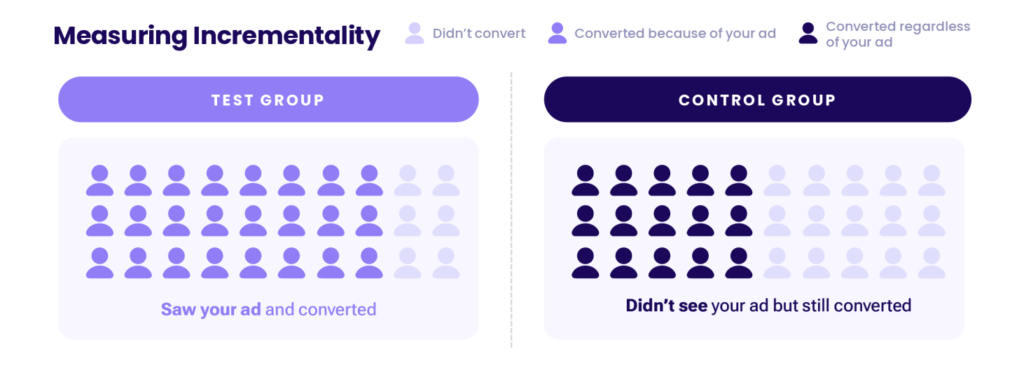
Attribution is broken and most marketers know it. Platform-reported ROAS tells you what the platform wants you to believe. Matched market tests tell you what’s actually happening. By isolating a channel’s effect within a specific geography, you get real-world proof that your spend is moving the needle rather than just capturing demand that would have converted anyway.
Since matched-market tests run in a select handful of geographies, they let you trial a strategy without rolling it nationwide. This reduces risk by limiting financial exposure and identifying potential downside risks before you scale.
The key is selecting markets that are as similar as possible so you’re not introducing unnecessary noise into the test. Common areas to consider include baseline performance, demographic match, geo-leakage risk, and market structure & competitive landscape.
For baseline performance, you want markets that behave the same before you touch anything. This could include similar conversion volume, seasonality patterns, and media responsiveness. From a demographic perspective, you’re looking for similarities in age and income distribution, education level, and the urban vs. rural mix. When thinking about geo-leakage risk, factors like DMA adjacency or overlapping media reach zones can help reduce contamination. And finally, market structure and competitive landscape are often overlooked, but if one market is in a price war while another comfortably owns the category, that can skew your results, so it’s important to take them into account.
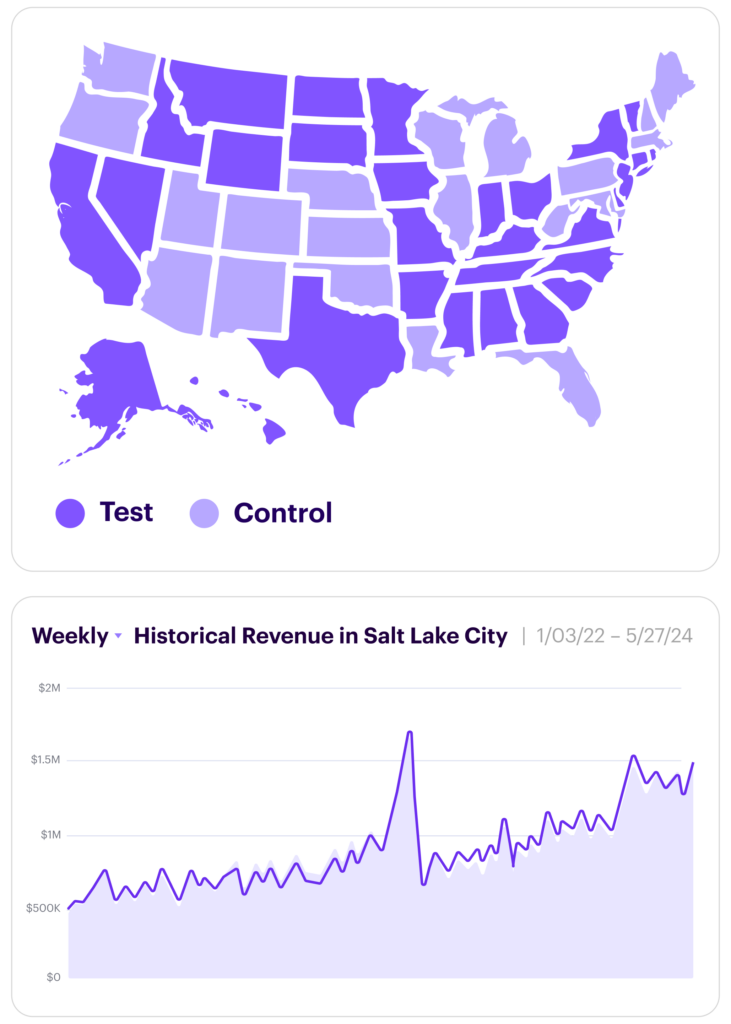
A matched-market test helps you understand how different parts of your media mix perform by isolating them within a specific geographic area (1). For example, if you wanted to see how your streaming campaign drives signups, you could run the campaign in Boston and compare signups levels to a similar dark market like Denver, with comparable urban-suburban mix, income levels, and healthcare behavior. The difference between the two cities represents your incremental lift from streaming.
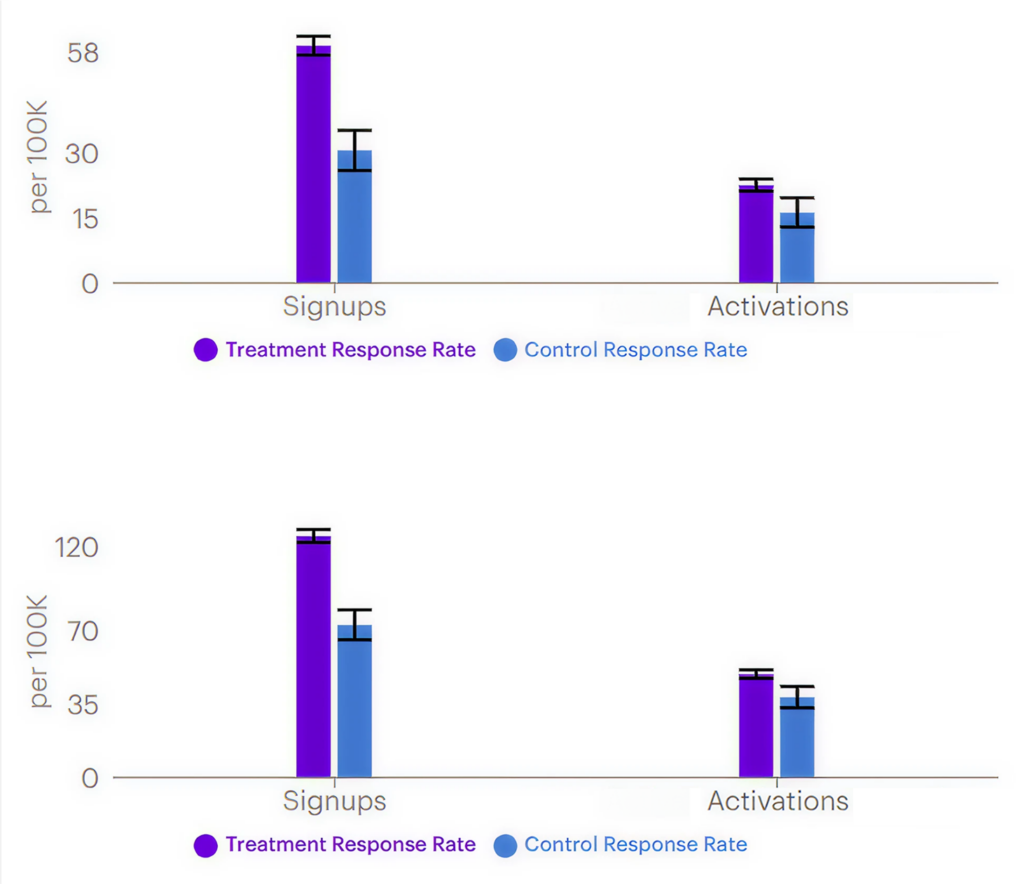
It can also indicate which platforms are good for different functions. Streaming might be the best for driving overall orders, Reddit might be the best for driving new customer acquisition, and Display might be the best for repeat purchases. A match market test can also be used to measure the lift in creative or influencer content.
Incrementality can help marketers identify sources of ad waste and understand which touchpoints promote growth. Our playbook explains it all.

When set up correctly, a matched-market test can serve as a representative sample of the country. It can also serve as a crystal ball for where to scale next. By proving out incrementality, you can pinpoint areas of waste as well as areas of growth. This allows you to refine your media mix and allocate your dollars in the best possible places as you scale nationally.
Running a matched market test isn’t as simple as turning a campaign off in one city. The design, data quality, and stakeholder alignment you build before launch are what determine whether your results are actionable.
Getting early buy-in for any robust test is essential for success. There’s always a balance between the speed of answers and statistically sound results. It’s also important to ensure the test has enough volume to detect lift with statistical confidence.
During the brief process, it’s key to pull in all relevant stakeholders so everyone is aligned on the test design. That alignment should cover audiences, platforms, the test timeline, any external factors, and the primary KPI (such as orders or new customer acquisition). Once there is alignment on the brief, these factors can be used to define the test size and structure. Getting early buy-in also helps prevent mid-flight shutoffs, which ultimately weaken results.
Reliable geo-level conversion and spend data is critical for clean analysis and accurate results. Before you go live, it’s important to run a series of QA checks to confirm that all geo targeting is in place, the correct creatives are set to launch, and all necessary data pipelines are in order. It’s also best practice to monitor cross-contamination levels throughout the duration of the test. Small leakage rates can be tolerated and scrubbed out during analysis but you don’t want to wait until the end of the test to realize contamination levels were too high and the test is no longer valid.
Finally, the last step is to run the analysis. From a timing perspective, it’s important to consider analysis windows and cool-off periods. The cool-off period allows for delayed conversions to be accounted for. Ensuring the results are complete and reflective of consumer behavior.
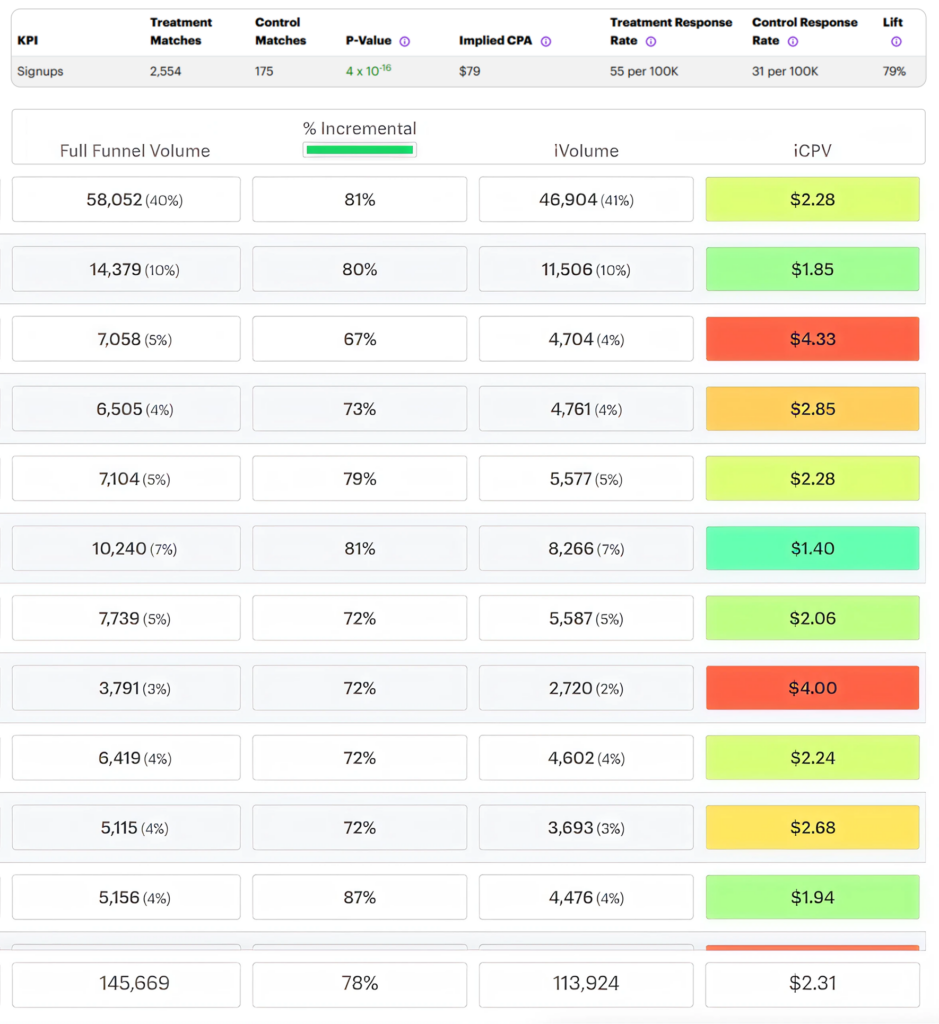
A single matched-market test only represents a moment in time, and regular incrementality testing should be part of ongoing best practices. Ideally, a dedicated incrementality test is warranted for a channel roughly once a year. This isn’t a one-size-fits-all recommendation, but rather a baseline to adjust from depending on your goals, your rate of change, and the stability of your data signals. For example, you may want to test more frequently if you’re entering new markets, shifting your media mix, adopting new platforms, or seeing volatility in attribution.
Signal loss is becoming the new normal. As user-level data erodes and platform attribution becomes less reliable, the brands that invest in rigorous measurement methodology will have a major advantage over those still relying on last-click logic. Matched market tests are how you build a media plan you can actually trust.
For advertisers ready to get this level of rigor in their strategy, Tinuiti’s Incrementality Playbook is the best place to start. Explore a full framework for testing, planning, and smarter growth.

Senior Solutions Architect, Tinuiti
Liv Smith is a Senior Solutions Architect at Tinuiti, supporting go-to-market strategy for the advanced measurement and analytics solutions that drive brands’ growth. She lives in Boston with her dog, Scottie, where she enjoys exploring new trails, trying new coffee shops, and reading new books.