Tinuiti Live 2026 Recap: The Orchestration Era


As marketers, we have more at our fingertips than ever before. More automation. Countless dashboards. An endless tech stack.
Yet our jobs keep getting harder.
Why? Because with every new tool, platform, and innovation, we’re given another layer of operational complexity. More data, yet things are less clear. Systems that don’t talk to each other. Tools that make simple tasks complex.
At Tinuiti Live 2026 at Civic Hall in New York City, we proposed a solution.
One that requires changing how we’re operating altogether—and shifting our mindset from optimization to orchestration.
The end goal? Bring our media, measurement, creative, and audience intelligence into one connected system, while striking the right balance between human strategy and agentic execution.
We’re calling it the Orchestration Era. And throughout Tinuiti Live, we explored what this looks like in practice.
For those of you who weren’t able to join us at Civic Hall, let’s set the scene.
Tinuiti Live spanned five floors of the iconic venue. While the mainstage and breakout sessions provided the strategic content, we designed the rest of the venue to make sure attendees never ran out of things to eat, explore, interact with, or take home.
This included:
Our sponsors also made sure everyone was fueled from morning to night with a top-tier food and beverage spread. To start, we had breakfast sponsored by Instacart. Then came the coffee cart courtesy of Klaviyo (did someone say lavender latte?). A Roku-branded snack cart made a midday appearance, followed by lunch sponsored by JWX and an exclusive CMO luncheon.
We closed out the event with a cocktail hour, and then came the real highlight: rescue puppies (a.k.a. Puppy Play Time sponsored by SKAI). This was part of our Thankful Giving initiative supporting Second Chance Rescue. And also because everyone can benefit from puppy snuggles!
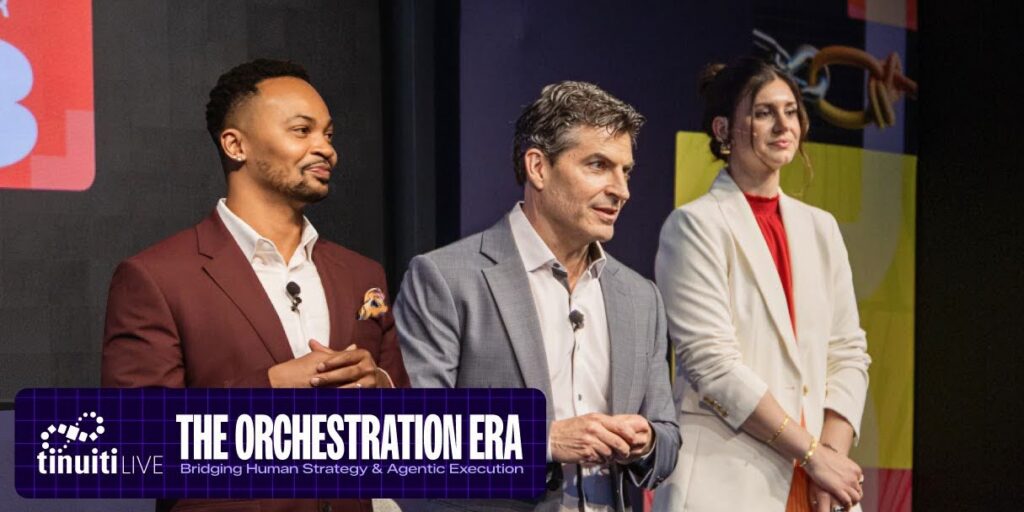
Tinuiti President Jeremy Cornfeldt opened the day, alongside emcees Liv Smith and Aaron Gooden, with an honest look at the state of the industry.
Marketers are navigating a lot right now. We’re grappling with geopolitical tensions, tariffs, rapid technological shifts, and changing consumer behaviors. The pressure is high and the ground keeps shifting.
So what’s the answer? At Tinuiti, we believe the solution comes down to two things: orchestration and strategic partnership. That means breaking down the silos between audience, media, measurement, and creative—bringing all these levers together into a unified system.
Technology is key to this, but it can only get you so far. That’s why we must also lean into the human element. It’s more important than ever to build genuine relationships and champion human judgement so that we can all adapt and grow together.
“Our success is 100% predicated on your success. And that’s the part that I love about the agency business the most. It’s a true partnership when it’s done right.”
Jeremy Cornfeldt, President, Tinuiti
Featuring Ann Dragovits, Director US Media Strategy, Planning and Investment, PepsiCo, and Tavo Castro, EVP, Head of Strategic Planning and Investment, Tinuiti.
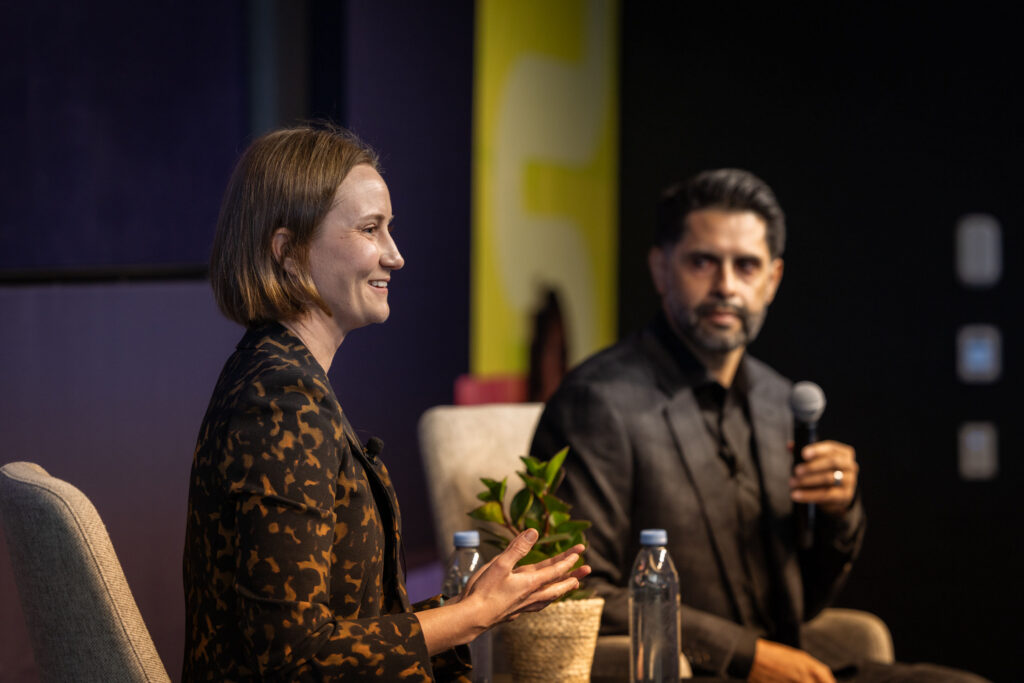
For the first session of the day, Tavo Castro and Ann Dragovits walked through how PepsiCo is rethinking the role audience intelligence plays in the campaign planning process.
Most brands treat their audience as a targeting setting. You define your segments, you optimize toward them, and you move on. But what if audience data could do something more useful—like inform the strategy before a single dollar gets spent?
“It’s a really simple pivot, but requires a mindshift to think about what audience data can truly be used for — not just for optimization, but to inform the in-going strategy in how we build a plan around our audience.”
Ann Dragovits, Director US Media Strategy, Planning and Investment, PepsiCo
Rather than treating audience as just another downstream targeting lever, the conversation focused on bringing audience intelligence upstream into the strategic planning process.
“This is where we really think the power of AI can come to bear,” explained Tinuiti’s Tavo Castro. “AI democratizes access to these incredibly valuable insights and puts them into the hands of the strategists that make these decisions upstream.”
Key Takeaways:
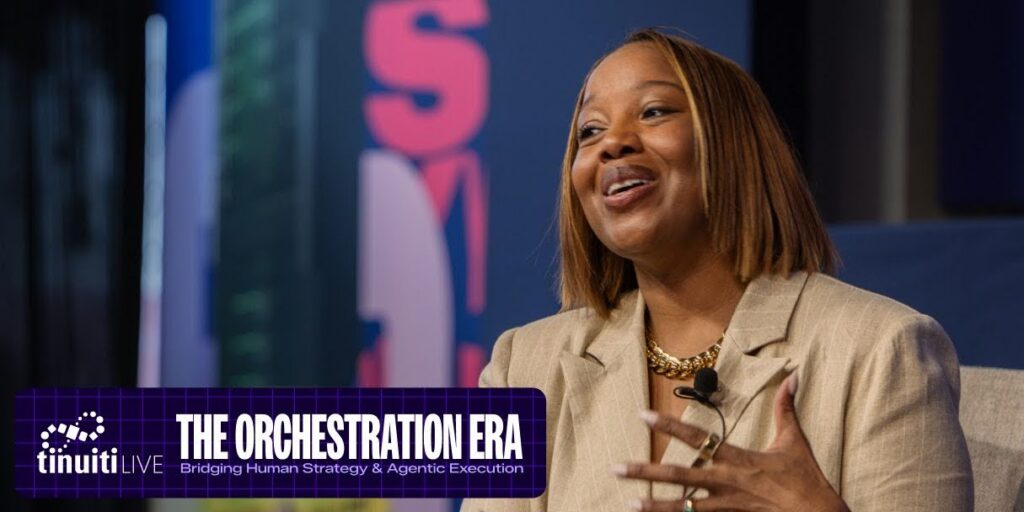
Featuring Deena Ashford Gardner, Head of Industry, Commerce, Google, Sean Odlum, Chief Product Officer, Tinuiti, and Brian Binder, Sr. Innovation & Growth Director, Tinuiti.
YouTube is category-defying. It’s a video platform, a social network, a commerce platform, a search engine, even a vMVPD. Oh and as of recently—it’s the largest podcasting platform on the internet.
It’s also, for many marketing teams, one of the hardest channels to justify in a budget conversation. That’s the problem Sean Odlum, Tinuiti’s Chief Product Officer, and Brian Binder, Tinuiti’s Sr. Innovation and Growth Director, set out to solve.
“The way we measure YouTube today is like trying to measure an ocean with a ruler. If we just look through the narrow lens of the last-click conversion, we’re really missing and undervaluing the impact of YouTube. We want to look at the total lift across the full funnel.”
Deena Ashford Gardner, Head of Business Commerce, Google
During this session, Sean Odlum joined Deena Ashford Gardner and Brian Binder to unpack why traditional attribution models consistently undervalue YouTube—and how Tinuiti is approaching measurement differently with our YouTube Intelligence Suite in Bliss Point.
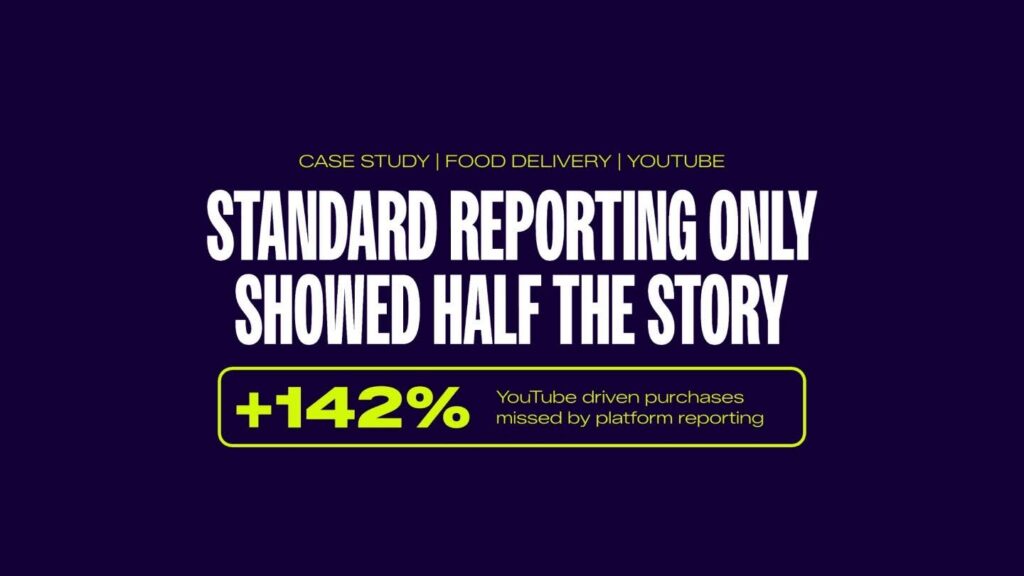
“Google has one of the strongest first-party graphs in the world,” explained Odlum. “So what we’re then doing on the other side is taking our CRM integrations with clients rooted in their own outcome data. We can then join YouTube exposures to your first-party data and understand in a deterministic fashion which of your conversions have been exposed to a specific sequence.”
Key Takeaways:

Featuring Marisa Thalberg, EVP, Chief Customer and Marketing Officer, Catalyst Brands LLC, and Diana DiGuido, Chief Client Officer, Tinuiti.
Marketing is rife with false tradeoffs. Brand vs. performance. Human vs. agent. Data vs creativity.
But any marketing leader worth their salt knows that real success lives at the convergence—not the either/or. That was the core focus of this fireside chat, where Tinuiti’s Chief Client Officer Diana DiGuido sat down with Marisa Thalberg, a brand builder who has led marketing at some of America’s most recognized companies and is now navigating that exact tension at Catalyst Brands, home to JCPenney, Brooks Brothers, Eddie Bauer, and Nautica.
“The paradigm of brand versus performance makes me insane,” Thalberg explained. “Splitting up brand and performance and not creating an ecosystem that is all talking to each other is not an ideal way to go.”
The conversation centered on what Thalberg calls the “math and magic” of modern marketing. This is the need to balance storytelling and human connection with data, optimization, and the tools to prove brand investment’s value in the language of the CFO. Neither works without the other, and the leaders who figure out how to hold both at once are the ones setting the pace.
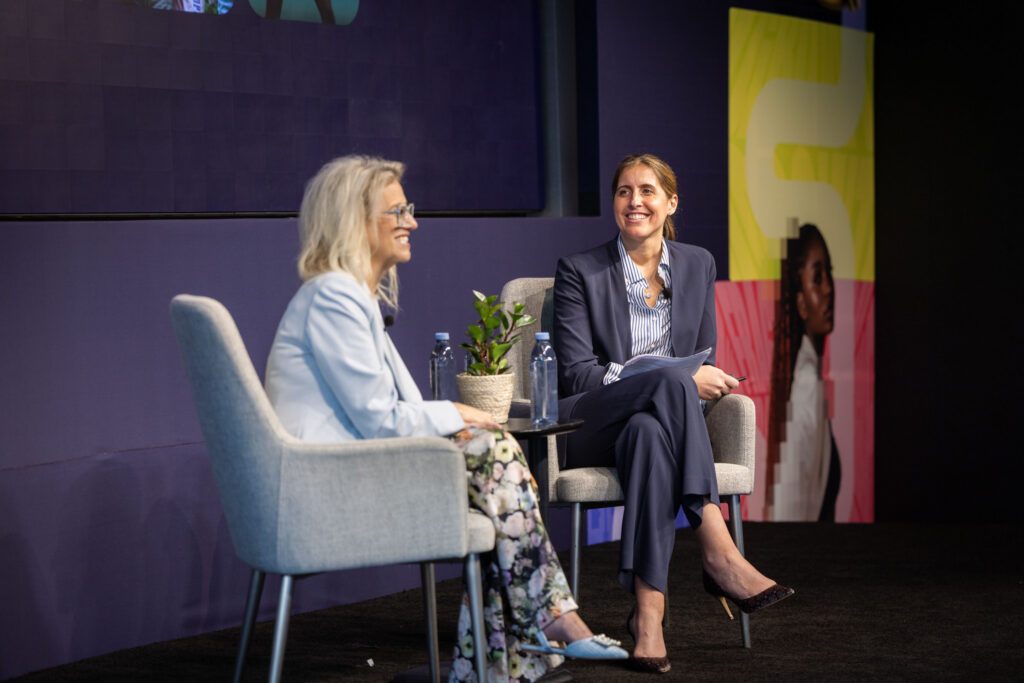
“Orchestration is the most essential and hardest part of roles like ours. For anyone in a leadership marketing role, what you’re trying to do is orchestrate across the complexity of your team.”
Marisa Thalberg, EVP, Chief Customer and Marketing Officer, Catalyst Brands
Key Takeaways
Featuring Simon Poulton, EVP, Growth & Innovation, Tinuiti.
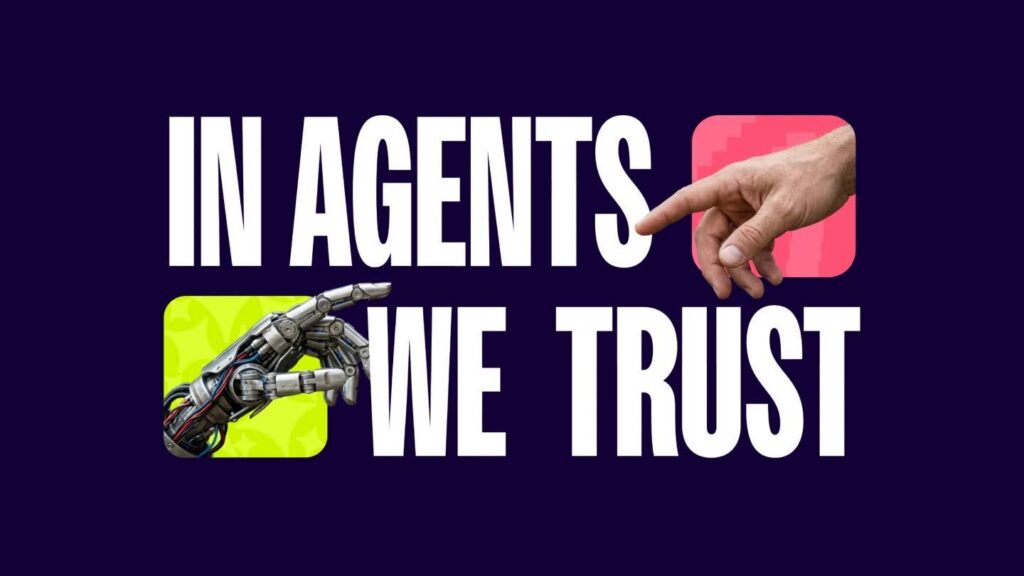
What would you trust a bot to do?
Drive your car? Trade your stocks? Manage your entire advertising strategy and budget?
A decade ago, the answer to all of these was a hard no. Today, they’re happening in different forms across industries—including marketing. We have entered the agentic era.
But as AI shifts from a basic tool humans log into toward a network of autonomous agents acting on behalf of businesses, marketing leaders are running into a central issue: trust.
Consider agentic media buying. The issue isn’t a lack of ability, it’s a lack of incentive alignment. Any platform will optimize for its own best outcome rather than the buyers’ best interests. And beyond incentives, there’s the question of accountability.
“A computer can never be held accountable, therefore, it should never make a management decision,” explains Poulton.
This doesn’t mean that marketers have to stay in the weeds. But it does mean there should be a human in the loop setting guardrails, designing systems, and finding the right balance between human strategy and agentic execution.
“As leaders, we don’t need to micromanage the flaps or the rudder, but we need to define the horizon, the pitch, and we allow for roll so we can let the agents fly.”
Simon Poulton, EVP, Growth & Innovation, Tinuiti
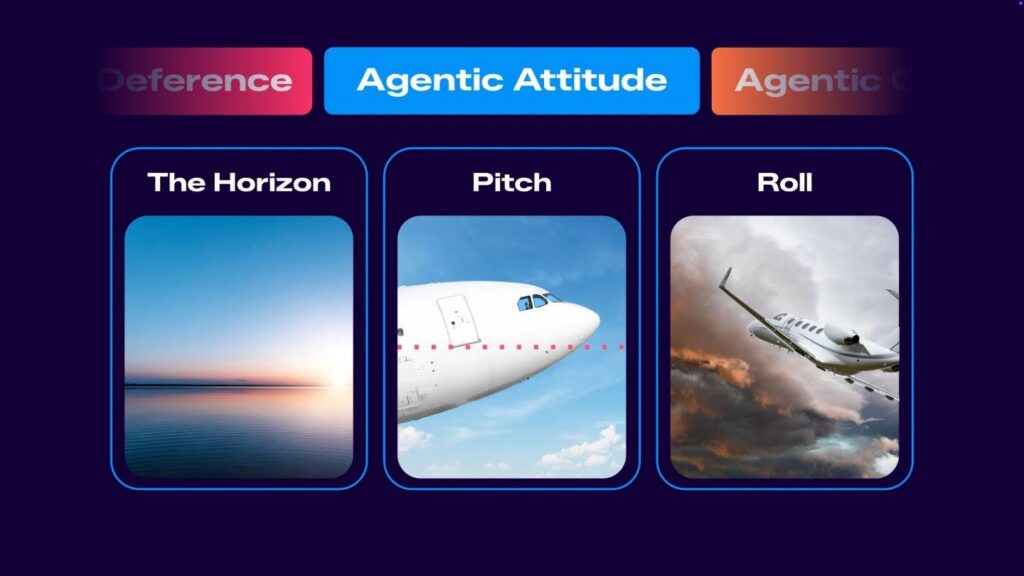
Underpinning this shift is the Model Context Protocol (MCP), a framework that acts as an independent source of truth, ensuring AI systems operate in alignment with defined strategic goals.
Key Takeaways
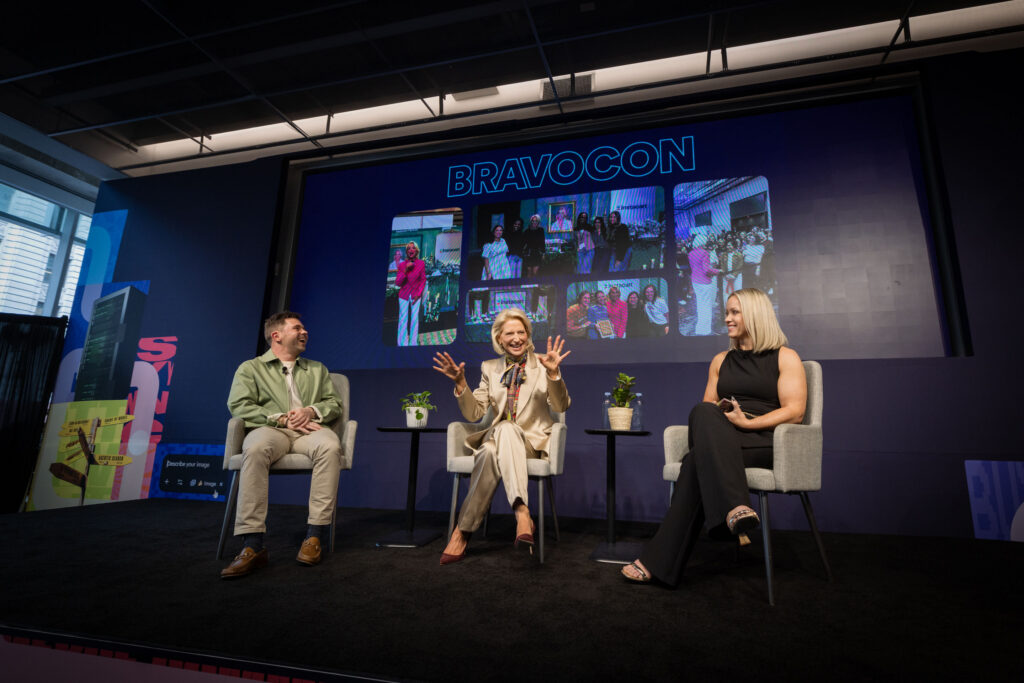
Pictured above left to right: Jay Adoue, VP, Development, NBCUniversal Advertising & Partnerships, Dorinda Medley, Television Personality, Author and The Traitors Season 4 Cast Member, and Shasta Cafarelli, Head of Media Investment, Tinuiti.
After lunch, we took a detour to the pop culture side of the Orchestration Era.
Dorina Medley, Jae Adoue, and Shasta Cafarelli discussed what happens when brands stop chasing impressions and start participating in culture. After all, audiences are no longer passive viewers sitting on the couch; they are actively co-creating the cultural zeitgeist.
So how do brands move from being something people see to something people invest in, talk about, and become part of a passionate fanbase? A big part of this, our panelists agreed, requires leaning into authenticity. Not in a polished, over-produced way, but in a way that feels emotionally authentic and genuinely resonates with communities.
“Personality is always going to outweigh perfection. And specificity sometimes outweighs scale.”
Dorinda Medley, Television Personality, Author and The Traitors Season 4 Cast Member
By looking at real-world master classes in fan engagement such as NBCUniversal’s marquee fandom event, BravoCon, panelists discussed how networks turn intellectual property into highly loyal communities. When brands show up in these spaces with emotional truth and a genuine respect for the fandom, they move past transactional advertising and become part of the cultural moment itself.
Key Takeaways:
The value of experiential ecosystems: Turning content into real-life community touchpoints allows fans to interact with brands in a physical, memorable setting—driving long-term loyalty that lasts well after the cameras stop rolling.
Featuring Dalton Dorné, CMO, Tinuiti, and Jake Thomas, Head of Business Development, Tinuiti.
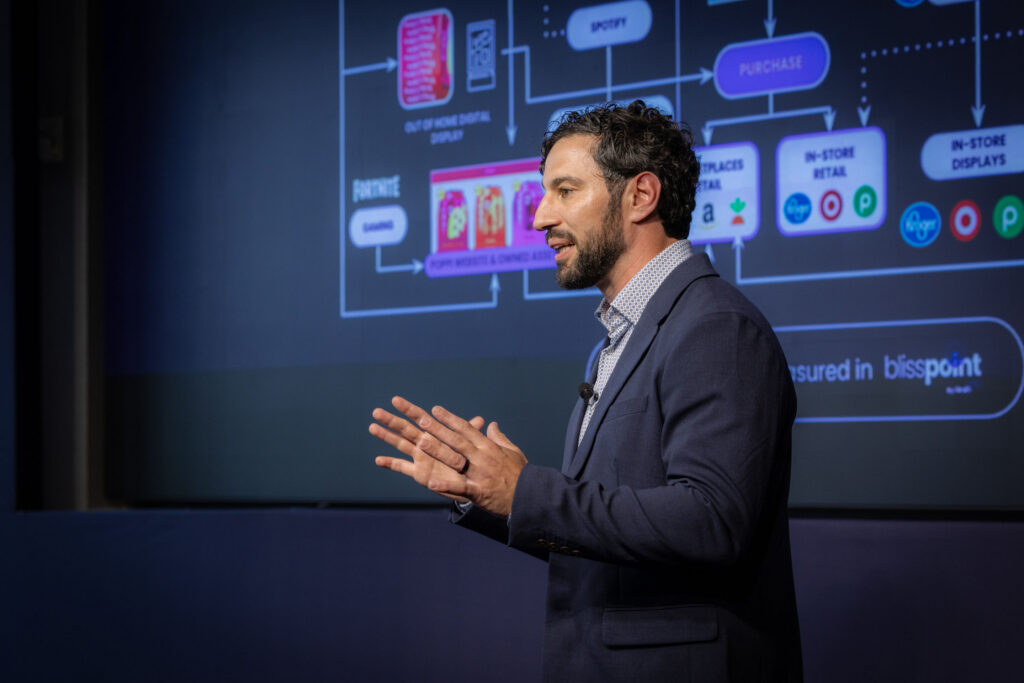
The customer journey is fragmented. Media is consumed across countless channels, and most measurement systems are only capturing a fraction of the impact. The result? Misallocated budgets, undervalued brand investment, and a lot of explaining yourself to the CFO.
In this session, Dalton Dorné and Jake Thomas introduced the Holistic ROAS framework inside Bliss Point—a decision engine designed to solve this exact complexity. Instead of looking at channels in a vacuum, this system ingests data across online DTC, retail media networks, and physical in-store sales to map out exactly how media spend drives enterprise value.
“We’re trying to map the efficiency frontier. If you keep on investing another dollar into media, we’re expecting you to get something in return. The question is for how long do you get that return?”
Jake Thomas, Head of Business Development, Tinuiti
The idea reframes media measurement as less of a reporting exercise and more of a decision engine—one that helps marketers understand not just immediate returns, but the downstream effects of brand investment over time.
Measurement tech that shows what’s driving growth—and exposes what’s holding it back.

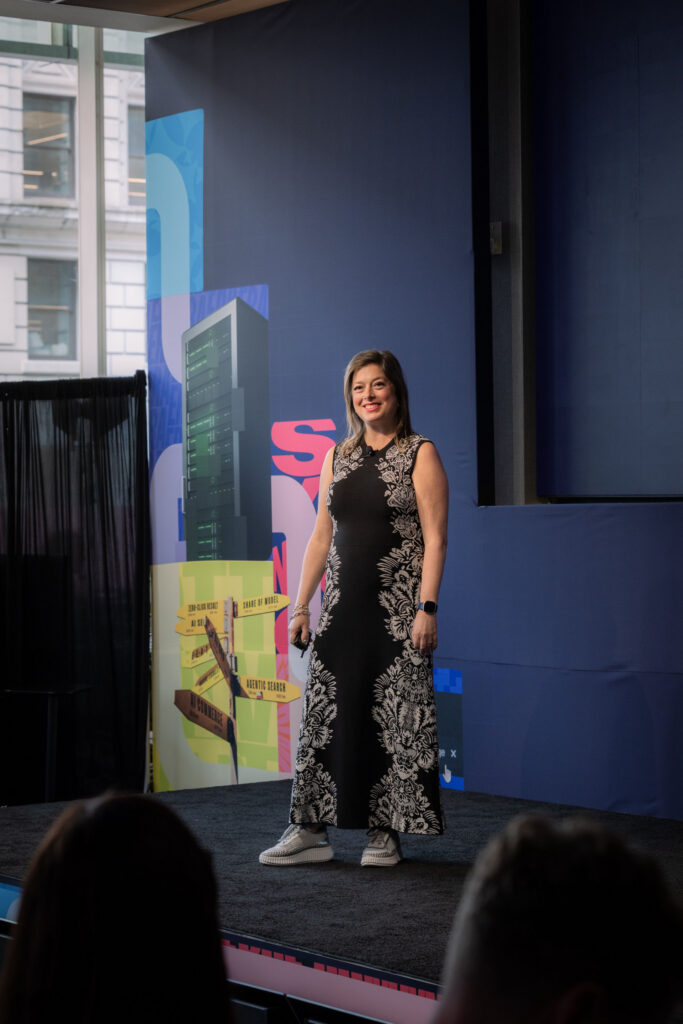
Featuring Iqbal Brainch, VP Marketing and Digital, Culligan International, Ashley Foster, Creative Partnership Lead, Meta, Lauren Walden, Client Partner, Sr. Director, Tinuiti, and Whitney Mortimer, VP, Executive Creative Director, Tinuiti.
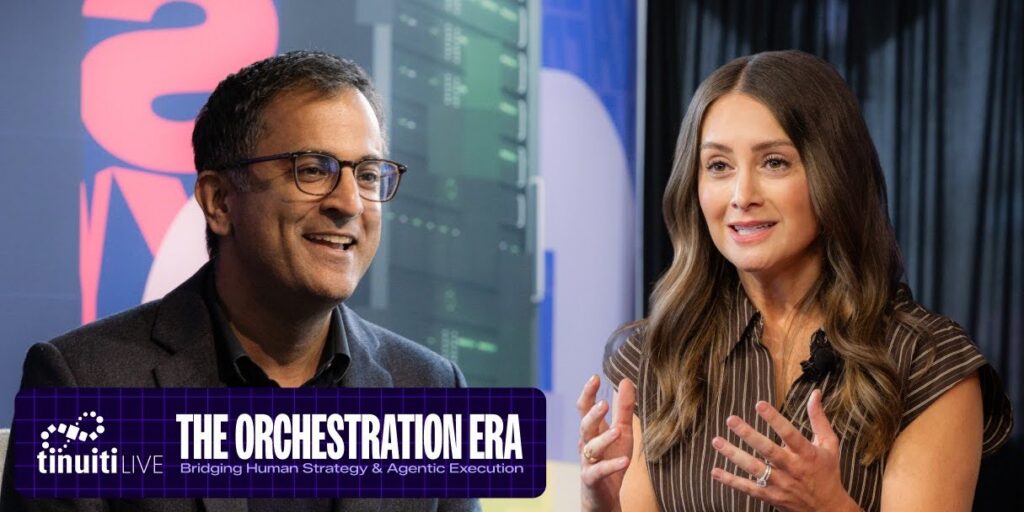
We live in a world of more creative, more volume, more variation. While this is good in theory, it means there’s more and more pressure to feed the content machines.
And in an ecosystem ruled by AI and platform algorithms, the single, hyper-polished brand asset often fails to perform. Tinuiti’s Whitney Mortimer explained, “The way we approached creative in the past no longer works due to AI and algorithms. You can’t just put out super polished brand creative and hit your goals.”
The panelists tackled what creative strategy actually looks like in a world where algorithms are doing the distribution.
“Meta’s system is fueled by diversification. When you give us diversified assets, the algorithm can do what it does best, which is put the right ad in front of the right person at the right time. And that’s not just good for business, it’s also better for your audience.”
Ashley Foster, Creative Partnerships Lead, Meta
The core thesis? Creative content is no longer just about aesthetics. It’s also a primary targeting signal. To scale without bleeding ad spend, brands must embrace creative diversification, feeding platform algorithms a deep library of conceptually distinct assets so the machine can do what it does best: find entirely new pockets of demand.
Today, different formats, tones, and visual styles—UGC, animation, product-led storytelling, more editorial cuts—are your competitive advantage. They’re inputs that expand the surface area for testing and performance.
For Culligan, the proof is in the measurability.
“We love measuring performance,” added Brainch, VP of Marketing and Digital at Culligan. That’s why we partner with Tinuiti, and that’s why we love Meta—because we can measure everything.”
While the main stage and breakouts were the center of attention, a ton was going on offstage, as well. Across the building, four separate content studios were actively producing and capturing real-time conversations:
On the leadership front, we also celebrated a well-earned moment for Shasta Cafarelli, who was promoted to Head of Media Investment during the event—an announcement that reflected the broader theme of growth and evolution across the organization.
And let’s not forget the giveaways. We made sure a few lucky attendees went home with even more than expected, including a premium Away bag and tickets to catch Stranger Things on Broadway via Netflix.
Tinuiti Live 2026 covered a lot of ground.
But the throughline was crystal clear: The brands that win in the Orchestration Era aren’t doing more. They’re going back to the drawing board and doing it differently—with systems that actually talk to each other.
Here are three takeaways to that end:
Have questions about this year’s announcements, or want to learn more about capabilities showcased during the event? Contact us today.

Director of Content Marketing, Tinuiti
Traci Ruether is Tinuiti’s Director of Content Marketing, leading full-funnel content strategy across social, search, thought leadership, and more. A writer by trade, she focuses on creating and distributing content that makes people better at their jobs—ideally entertaining them along the way.