Home Services Marketing: Local Leads, Reviews, and Growth Playbook


Home services marketing works best when it’s treated like an operating system for your business: connecting demand, conversion, and reputation, rather than a set of disconnected tactics. This article digs into how businesses can:
Home services marketing is no longer just “getting the phone to ring.” Homeowners are spending more on necessary repairs and maintenance, while trimming back discretionary improvement projects. They’re also doing more comparison shopping along the way.
Search engines, reviews, licensing, insurance, and price now shape nearly every provider decision from the first query to the final booking.
Start by identifying where margin actually lives in your business. An HVAC install behaves very differently from a furnace repair; a drain clearing is a different animal than a full repipe. Group your work into clear service lines (install, repair, maintenance, replacement, specialty services) and track revenue, margin, and lead requirements for each.
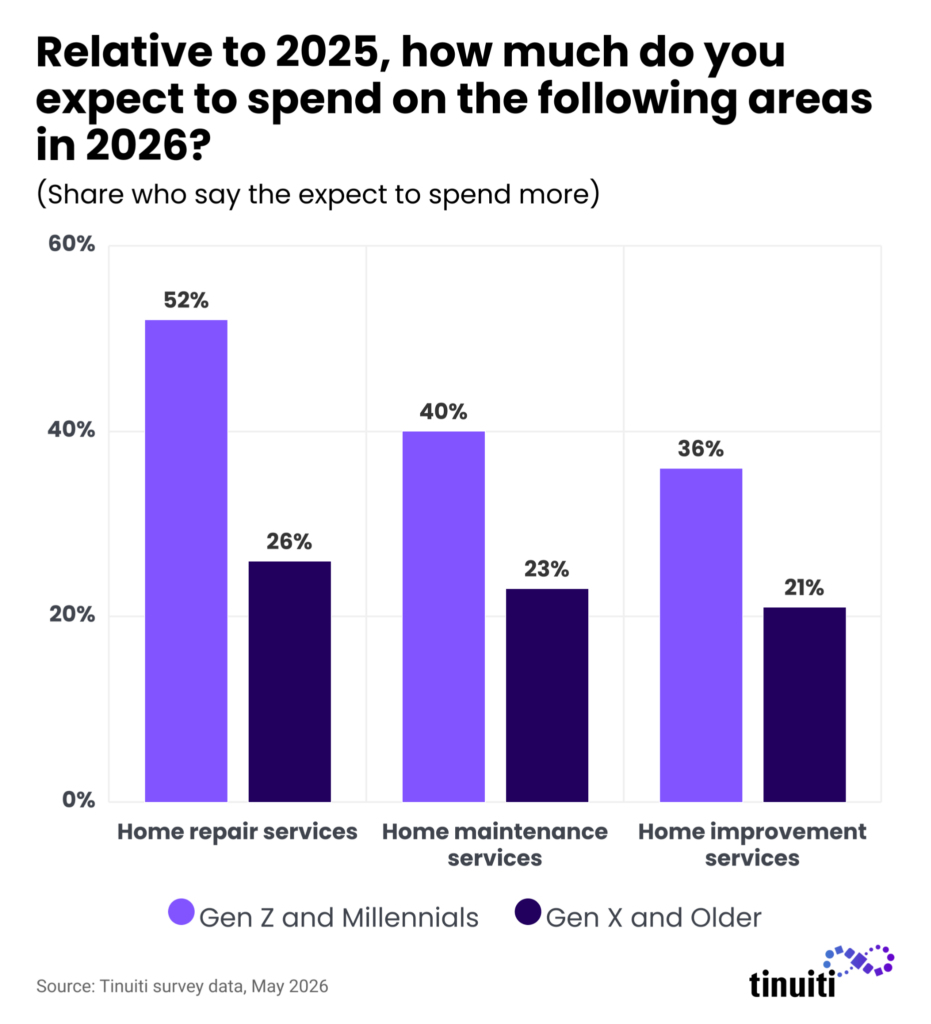
In our 2026 Home Services Marketing Study, we found that more homeowners plan to invest in repairs and maintenance this year than in larger home improvements. That means tune-ups and repairs designed to keep things working are more predominant today than major upgrades. This should affect how you allocate budget across service lines.
After you’ve mapped which service lines truly drive margin, the next layer is timing. Seasonality shapes demand across almost every category: cooling and heating needs shift with the weather, storms drive roofing and restoration work, and spring and summer see spikes in exterior and yard projects. Building a simple calendar that shows when each service line tends to peak by month, and weather patterns, helps you adjust offers, staffing, and media before demand hits, instead of reacting after the phones are already ringing.
How Technology and Economic Pressures are Changing Homeowner Priorities and the Path to Hiring Service Providers

Once you understand your service mix, the next step is turning that into lead math that leaders can actually use to run the business. Instead of vague goals like “more leads,” you’re defining what volume and quality look like by line of work.
For each major service line, spell out:
At the branch level, this often rolls up into one simple operating KPI: “how many qualified calls per branch per day?” When you know the call requirement for each location to hit revenue and margin goals, you can hold media and channel owners accountable for filling that bucket, not just generating impressions or fuzzy “awareness.” It also gives branch leaders a clear, concrete number to manage against, tying marketing performance directly to day-to-day operations.
Homeowners don’t pick a provider because a website says “we do it all.” They hire for specific problems under real emotional and financial pressure. Your positioning should reflect that reality:
Clarity here matters because it guides everything downstream: offers, headlines, landing page copy, and even review responses should reinforce the same story.
Home service demand is more nuanced than a generic “homeowner” audience. Useful ideal customer profiles (ICPs) follow intent and context:
Within those, you’ll find homeowners, rental property owners, property managers, HOAs, and light commercial clients with very different expectations for scheduling, documentation, and long-term relationships.
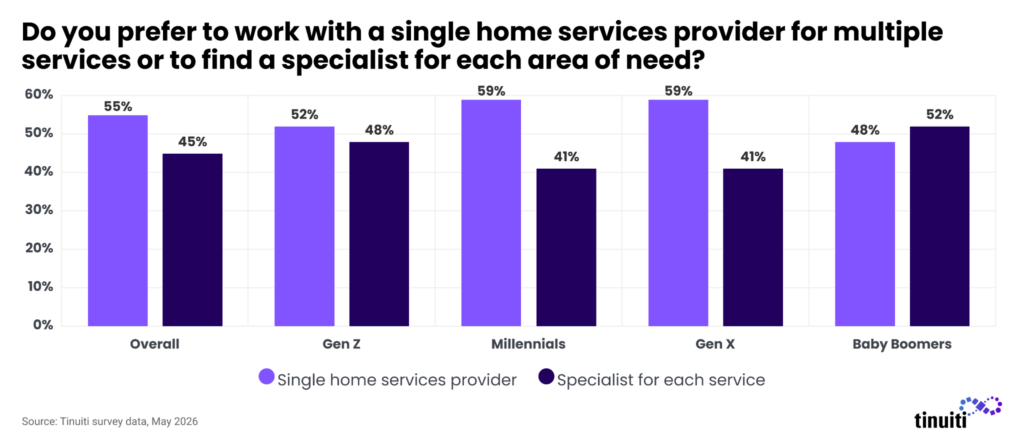
Our Home Services Study shows that 55% of homeowners prefer to hire a single provider for multiple services, while a meaningful share still seek out specialists for each line of work. That split should inform whether your ICPs emphasize “one home, one provider” messaging or specialty expertise for critical projects.
Even when the math and messaging are right, decisions are driven by a few core anxieties: “Will they show up?” “Will they upsell me into things I don’t need?” and “Will it be done right the first time?”
Our Home Services Marketing Study highlights how those concerns play out. When homeowners are making hiring decisions, 41% say being licensed and insured is one of the three most important qualities a company can have (the top response), while 35% put “having the best prices” among their top three. Another 29% cite having worked with the company previously as a top factor, which elevates retention and repeat business as major growth drivers.
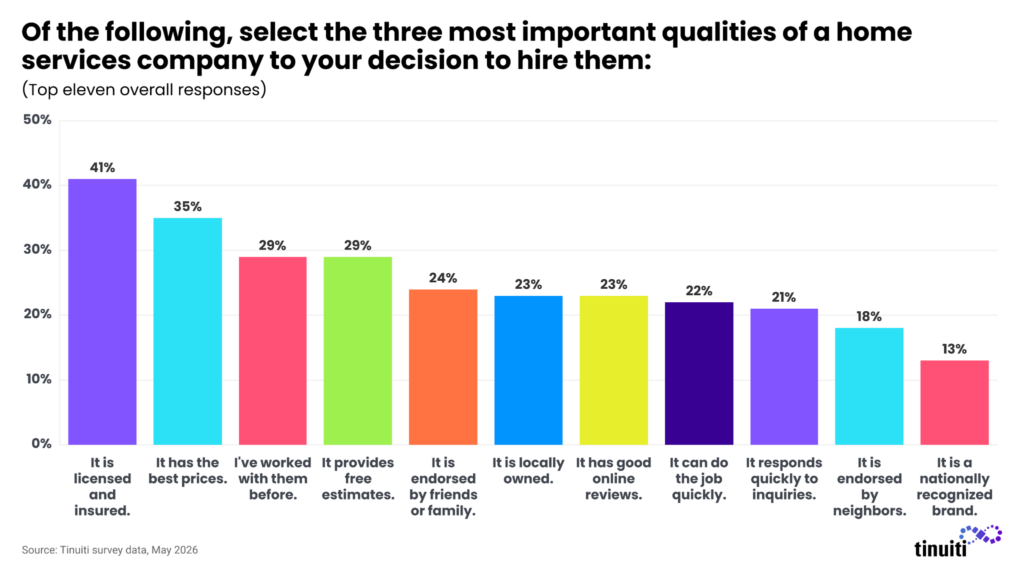
Trust signals that reduce these fears, including licensing, insurance documentation, clear guarantees, straightforward pricing, and visible reviews, should be front and center across your site, ads, and call scripts.
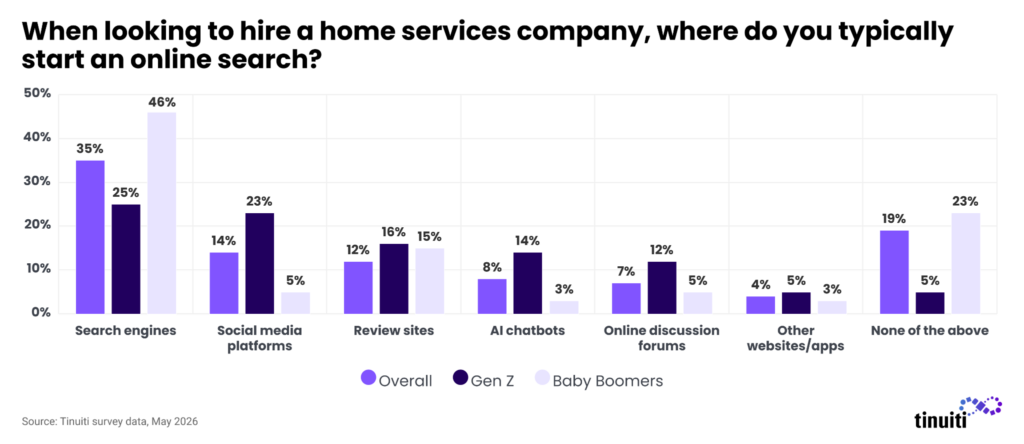
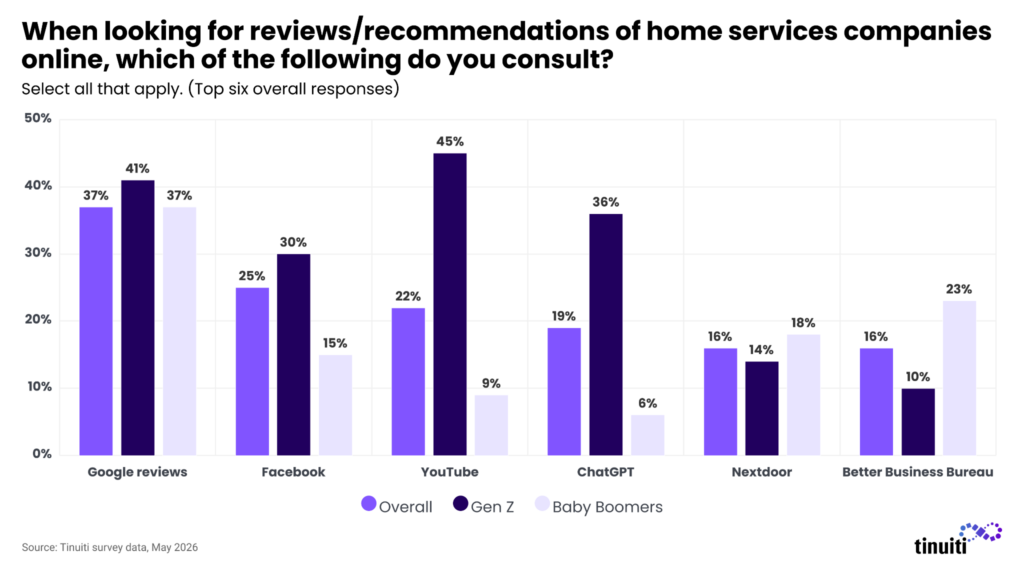
For many homeowners, Google Business Profiles are the first “real” look at your brand. Our study found that search engines are the most common starting point when homeowners begin looking for a provider, and Google reviews are the top source they turn to when seeking reviews or recommendations. That makes review volume, recency, and response quality core lead drivers, not just reputation metrics.
Build a review system around natural request moments:
Pair that with a review response playbook that stays calm, specific, policy-safe, and conversion-minded. Responses should acknowledge the situation, outline what was done or will be done, and demonstrate how you handle issues for future customers. When competitors leave fake or questionable reviews, document and dispute them through Google’s processes while responding in a measured way that reassures future readers without escalating.
A strong Google Business Profile is more than a star rating and a phone number. The way you show up visually and how often you update the profile both influence whether homeowners choose you and how often Google surfaces you.
Aim for an ongoing cadence, not one-time setup:
Think of GBP as a lightweight, constantly refreshed landing page for each branch, not a static listing you set up once and forget.
How complete your GBP is, and how accurately it reflects your business, affects how often and where you appear when homeowners search. It also shapes the signals Google uses to decide which profiles to show for specific queries.
To strengthen discovery:
When your GBP is complete, current, and aligned with the work you actually do, you make it easier for homeowners to find you at the exact moment they’re searching for help.
Get strategies that integrate channels, create seamless experiences, and resonate across the customer journey.

Search behavior in home services is intensely local. Our data shows that traditional search engines are the most common starting point for online provider searches, ahead of social media, review sites, and AI tools. That makes local SEO foundational for capturing demand.
Architect your site so each core service and priority city or zone has its own page: one primary page per core service (e.g., “HVAC Repair”) and one page per priority city or neighborhood where you actively serve customers.
Avoid thin, copy-paste city pages. Instead, differentiate content by including local case studies, jobs you’ve done in that area, relevant seasonal issues, and neighborhood-specific details. Internal links between service pages, city pages, FAQs, and resources help both users and search engines navigate and understand your footprint.
Once you’ve mapped your pages, align on-site SEO with how homeowners actually search:
Get our guide to AI in Search to learn what’s required to maintain visibility in the new search landscape.

Local authority is built across the entire local ecosystem, not just on your website. When search engines and homeowners see the same brand story in multiple places, it becomes much easier to trust and choose you. Focus on three pillars:
Home services brands live or die on local reputation. Beyond your website and ads, visibility in the community builds familiarity and trust long before a homeowner actually needs to book a job. When you show up consistently in the places people talk about their homes and neighborhoods, you become the “default” option they think of when something breaks.
Nextdoor is especially important here. It’s one of the most influential social platforms for discovering providers among older homeowners, particularly baby boomers. That makes it a powerful channel for word-of-mouth at scale: recommendations, neighborhood discussions, and “who did you use for…?” threads often become informal directories of trusted vendors.
Community presence can include:
These efforts create the “I’ve heard of them” comfort, something our study surfaced as a top-three hiring factor. Many homeowners feel more confident hiring brands they’ve seen or heard about multiple times, even if they haven’t worked with them before.
Reputation compounds over time when reviews keep coming in, not just when you chase them during slow periods. Build systems that:
Referrals are often the highest-quality leads you’ll earn. Design distinct offers and tracking for customer referrals (friends, family, neighbors) and partner referrals from realtors, roofers, restoration companies, and other complementary trades.
Trackable referral codes, shared documentation, and clear attribution help you see which referral partners and campaigns drive profitable jobs. Incentives should reward desired behavior without attracting low-quality leads, for example, credits tied to completed jobs rather than to booked appointments alone.
Home services search comprises brand, non-brand, and competitor queries, each with distinct risk and compliance considerations. Structure your Google Ads and Local Services Ads accounts around how homeowners actually search and hire:
Retargeting can be incredibly effective in home services, but only if it respects what homeowners are going through and how they actually make decisions. Someone trying to fix a midnight leak or a dead furnace is in a very different headspace than a homeowner researching a full system upgrade.
Instead of one-size-fits-all remarketing, tailor your approach:
Retargeting works best when it feels like a helpful reminder at the right moment, not a loud echo that follows homeowners everywhere they go online.
Promos and “can’t-miss” offers can keep trucks busy, but if they’re not designed carefully, they quietly erode margin and train homeowners to only call when there’s a discount. The goal is to make offers that fill the right kinds of jobs, at the right times, with the right economics behind them.
A few practical guardrails:
Most importantly, judge offers by the quality of the jobs they bring in. Track close rate, average ticket, gross margin, and review sentiment per offer, not just click-through rate or impression volume. The best offer is the one that attracts homeowners who are satisfied with the work, willing to recommend you, and comfortable calling again for the next project.
In home services, your website isn’t there to entertain, it’s there to make it feel safe and easy to reach out. Strong pages share a common “trust stack” that answers the biggest questions in seconds, not minutes. That trust stack is the foundation of conversion rate optimization (CRO): We recommend testing and refining how well each element moves homeowners from concern to contact.
Key elements include:
CRO here means continually testing and tuning these pieces: which headlines calm anxiety fastest, which layouts generate more calls or bookings, which trust elements matter most by service line or audience. When every element supports the same story, you reduce friction and improve conversion rates before the first call ever happens.
Phone calls remain the top booking method across generations, according to our Home Services Marketing Study. That makes call handling the real conversion funnel for many brands because small improvements in how calls are answered and routed can materially change your overall conversion rate.
Priorities for call centers and CSRs include:
AI-powered tools can help route calls, score interactions, and surface coaching opportunities, but they work best when human teams maintain close oversight and coordinate tightly with marketing and ops. In practice, CRO for home services is as much about improving call answer, routing, and scripting as it is about tweaking buttons and forms, because that’s where a large share of homeowners actually convert.
Homeowners’ preference for scheduling seasonal maintenance at least a week in advance makes email and SMS nurture a natural fit for home services. Done well, these channels turn one-off jobs into long-term relationships instead of single transactions.
Strong retention sequences typically:
These touches keep your brand present in homeowners’ lives between emergencies and projects, steadily increasing lifetime value while reinforcing trust.
Email, SMS, and outbound calling are powerful retention tools, but they come with real regulatory and trust responsibilities. Home services leaders need clear compliance guardrails so growth doesn’t come at the expense of homeowner rights or brand reputation.
Focus on three foundations:
When in doubt, favor clarity and explicit permission. Well-run compliance programs protect homeowners, safeguard your brand, and keep your best retention channels available for the long term.
To treat home services marketing like a true business function, you need a KPI stack that ties directly to booked, profitable work. The goal is to make it easy for leaders to see, in plain numbers, how marketing translates into jobs and margin by branch and service line.
Core metrics that belong on every dashboard include:
When these metrics are front and center, the conversation shifts from “how many clicks did we get?” to “how many profitable jobs did we earn, at what cost, and where do we need to adjust?”, which is where real growth decisions are made.
Measurement depends on clean tracking across the funnel:
Our broader measurement work with home services brands has proven that when you connect marketing and sales data this way, you can see how channels really drive outcomes, not just surface-level metrics.
| Tracking element | What’s captured | Who owns it | Where it lives | Reporting cadence |
| Call tracking numbers by channel | Source channel, campaign, branch, call outcome | Marketing + Call Center | Call tracking / telephony + CRM | Weekly |
| Form submissions | Source, service interest, contact details, timestamp | Marketing + Sales Ops | Website platform + CRM | Weekly |
| Appointment bookings | Channel, booked date/time, branch, service type | Dispatch / Scheduling | Scheduling system + CRM | Weekly |
| Offline conversion imports | Job status, revenue, margin tied back to lead | Analytics / BI | CRM → ad platforms | Monthly |
| Lead quality tags | Emergency, quote-shopping, repeat, low-intent | Sales / Call Center | CRM / lead management tool | Monthly |
| Missed-call and recovery tracking | Missed calls, callbacks, recovery success | Call Center Lead | Telephony + CRM | Weekly |
| Channel-level CPA and LTV | Cost per job, LTV per channel and campaign | Marketing + Finance | BI / reporting dashboards | Quarterly |
Once you have the right metrics and tracking in place, the next step is rhythm. Without a clear cadence, budget decisions slip back into gut feel or platform-level narratives instead of the reality of your branches and service lines.
A practical optimization rhythm for home services looks like:
For some brands, especially those with larger media mixes and multiple branches, advanced measurement like Rapid Media Mix Modeling (rMMM) and Geo MMM can add another layer of confidence. rMMM ingests historical media spend, performance data, and key demand drivers to show how each channel contributes to sales across the full funnel, with readouts frequent enough to inform in-flight decisions. Geo MMM then localizes that view, helping you see where and how much to invest by market and branch based on actual incremental impact, not just last-click credit.
In LeafGuard’s case, pairing rMMM with Geo MMM revealed that channels previously seen as “inefficient,” like social, direct mail, linear TV, and YouTube, were actually doing more to drive conversions than heavily funded search and affiliate alone. Reallocating budget based on those insights cut customer acquisition cost by 12% and increased prospects by 30%, while aligning spend to each branch’s market reality.
Used selectively, these tools turn your KPI dashboard from a rearview report into a forward-looking operating system, telling you not just how your mix performed, but where your next dollar should go by channel, week, and market.
You don’t need a huge external team to build a strong home services marketing system, but you also don’t have to carry every specialty in-house. The sweet spot is usually a hybrid model that keeps brand and customer experience close, while leaning on specialists for the pieces that change fast or require deep technical expertise.
A practical split often looks like:
For home services brands that work with Tinuiti, our Home Services team plugs into your existing org as an extension of your marketing and ops function: We help architect media and measurement around your branch network, use Bliss Point by Tinuiti to tie spend to booked jobs and margin, and coordinate closely with your call center and internal stakeholders so local realities always inform channel decisions.
Hybrid structures work best when internal and external teams are looking at the same numbers: a shared view of KPIs, lead quality, branch-level performance, and real-time feedback from call centers and techs. When everyone is working off one dashboard and one definition of success, marketing stops feeling like “the agency’s job” and becomes a unified part of how the whole business grows.
Strategy can look great on paper, but without tight processes, good leads slip through the cracks. Standard operating procedures (SOPs) make sure every call, form, and review has a clear path from “came in” to “handled.”
Three areas deserve documented, shared SOPs:
When SOPs are simple, visible, and actually followed, you reduce leakage between channels and branches, and give every marketing dollar a fair chance to turn into a booked, profitable job.
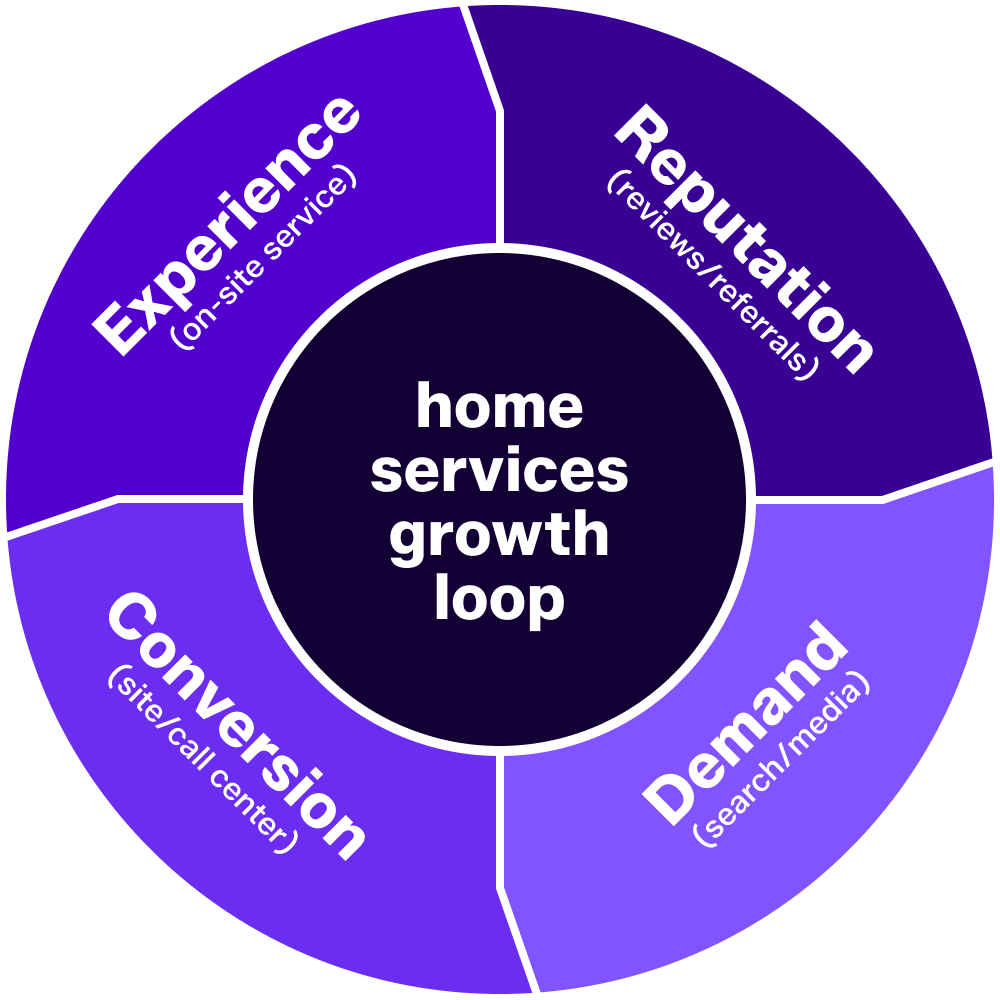
Home services marketing isn’t about chasing every new tactic. It’s about building a system that connects strategy, local presence, reviews, media, conversion ops, and measurement into a growth loop you can manage. When your team knows the lead math by service line, captures local demand with search and GBP, earns trust through community and reviews, converts calls reliably, and measures outcomes in terms that leaders understand, you can grow without sacrificing margin or reputation.

Copywriter, Tinuiti
Jenn Wheatley is a senior content strategist and copywriter who turns complex marketing data into clear, actionable stories. She develops research-backed reports and thought leadership that help brands navigate critical business decisions. Based in Utah, she enjoys cooking, strength training, and traveling with her family.